
How Much Do Door Canopies Cost in 2026: Your In-Depth Guide
Trying to work out whether the quote you've been given for a door canopy is actually fair? It's not always easy to tell. Prices vary wildly depending on the material, size, and who you're buying from — and that's before you factor in installation and the ongoing maintenance that nobody mentions upfront.
The problem is that most canopy suppliers only talk about their own products. Timber specialists will tell you wood is best. Metal fabricators push aluminium. Everyone has a vested interest. So we thought we'd put together something more useful — a straightforward comparison of what each type of canopy actually costs, including all the hidden extras that catch people out.
At Apex Canopies, we specialise in Composite and GRP canopies. But this guide covers all the main options — timber, GRP, composite, metal, and glass — so you can compare like-for-like and make a decision that works for your home and your budget.
Composite Canopies
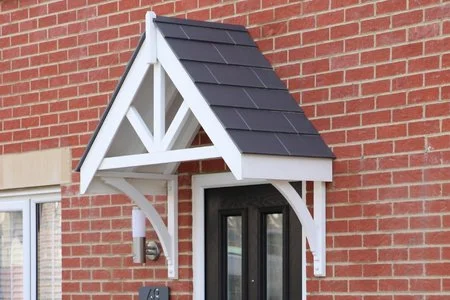
Composite canopies are made from engineered plastic polymers. They've become increasingly popular over the past decade because they're light, easy to fit, and essentially maintenance-free. For most standard residential properties, they offer the best balance of appearance, durability, and value.
What You'll Pay
Small, simple designs typically cost between £400 and £650. These work well for standard front doors and provide good coverage without overwhelming the entrance. Larger or more detailed styles — perhaps with decorative brackets or extended coverage — usually fall in the £650 to £800 range. For custom one-off builds designed to fit unusual doorways or match specific architectural features, expect to pay £800 to £1,000.
The Practical Reality
The appeal of composite is straightforward. Most competent DIYers can fit one in a couple of hours with basic tools — a drill, a spirit level, and a ladder are usually all you need. There's no painting, no staining, no annual maintenance ritual. If it looks grubby after a few months, wipe it down with a damp cloth. That's genuinely it.
Composite canopies come ready to install with all fixings included. They're light enough for one person to handle, though having someone to hold the canopy while you mark drill holes makes life easier. The material doesn't absorb moisture, so there's no risk of rot, warping, or fungal growth regardless of how wet your local climate gets.
The trade-off? Composite won't give you the grand, traditional look that a solid oak canopy might. If kerb appeal is everything and you're after that country house aesthetic, composite probably isn't your answer. But for most homes — particularly modern builds, suburban semis, and town houses — they look smart, last decades, and won't cost you time or money to maintain.
Our composite canopies come with a 10-year warranty and free UK delivery as standard.
Wooden Canopies
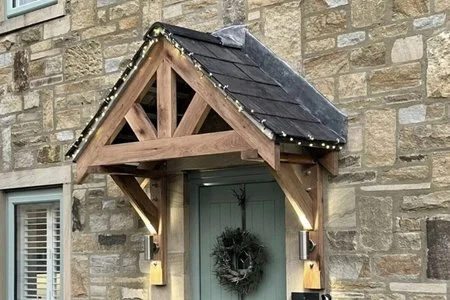
Timber canopies suit period properties and larger country houses. There's something about a well-made oak or hardwood canopy that looks properly established — like it's always been part of the building. For listed properties or homes in conservation areas, timber is often the only appropriate choice.
What You'll Pay
Basic designs in softwood start from £100 to £300 — these are simple, functional canopies without much decorative detail. Mid-range hardwood options, which offer better longevity and a more refined appearance, typically cost £300 to £600. Grand hardwood designs with intricate carpentry, larger spans, or premium timbers like oak can run from £600 to well over £1,000.
What the Brochure Doesn't Tell You
Here's the thing about wooden canopies: they typically arrive batten-ready, meaning you'll need to add the roof covering yourself. That means buying slates or tiles and paying a roofer to fit them — easily another £300 to £500 on top of the canopy price. Some suppliers don't make this clear until you've already committed.
Then there's the weight. Larger timber canopies are seriously heavy — sometimes requiring lifting equipment, scaffolding, and three or four people to install safely. Budget £300 minimum for professional installation on smaller canopies, and £1,500 or more for anything substantial. Attempting to install a large oak canopy without proper equipment is genuinely dangerous.
And the maintenance is real. Timber needs painting or staining every year without fail. Skip a year and you're risking moisture damage, warping, even rot. The British climate is unforgiving — constant wet-dry cycles will destroy unprotected wood within a few seasons. Factor in around £40 annually for materials (paint, brushes, sandpaper, wood preserver), plus half a day of your time each spring.
A well-maintained timber canopy will last 10 to 20 years. A neglected one? You might get five years before it starts looking shabby, and structural problems often follow shortly after.
GRP Canopies
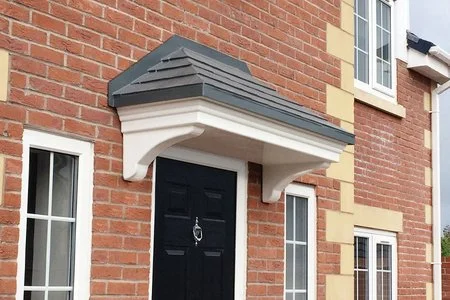
GRP (Glass Reinforced Plastic) canopies — also called fibreglass — are the go-to choice for volume housebuilders. Walk around any new housing estate and you'll see them everywhere. They're affordable, lightweight, and don't rot. For straightforward, no-fuss weather protection, they're hard to beat.
What You'll Pay
Entry-level GRP designs cost between £350 and £500. Mid-range options with more detailed mouldings or larger coverage typically run £500 to £650. Large or complex styles — perhaps spanning a double door or featuring decorative elements — fall in the £650 to £800 range.
The Practical Reality
GRP shares many advantages with composite: easy installation (most people can manage it themselves), minimal maintenance, and a long lifespan if fitted properly. The key difference is in customisation. Because GRP requires moulds to manufacture, bespoke designs become expensive very quickly — you're essentially paying for new tooling. In practice, you're choosing from existing shapes and sizes.
A few things to watch for: some cheaper GRP canopies can yellow in sunlight over time. It's fixable with paint, but worth knowing before you buy. Also, while the GRP shell itself is weatherproof, some manufacturers use timber internal frames to provide rigidity — and timber can still rot if moisture finds its way in through poorly sealed fixings. Ask what the internal structure is made from.
Most GRP canopies only come with a 3-year warranty, compared to 10 years for quality composite options. That difference tells you something about expected longevity.
Metal Canopies
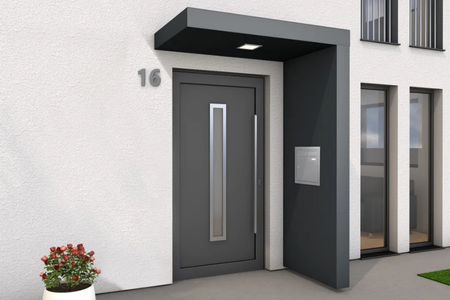
Aluminium canopies suit modern architecture — think clean lines, bold geometry, and a contemporary industrial feel. They're typically powder-coated in a specific RAL colour, allowing you to match existing metalwork, window frames, or create deliberate contrast. If you're building a new home with a modernist aesthetic, metal might be the only option that looks right.
What You'll Pay
Simple, smaller designs start at £500 to £700. Mid-range options with more substantial coverage or architectural interest typically cost £700 to £1,200. Large structural designs — cantilevered canopies, extended porticos, or designs requiring significant engineering — can run from £1,200 to £3,000 or more.
The Practical Reality
Aluminium doesn't rust, which is the main selling point. Maintenance is essentially non-existent beyond the occasional clean — the powder coating protects the metal underneath, and unless you physically damage that coating, it'll stay protected. When properly manufactured and installed, a metal canopy will last decades without any attention.
The downsides? Metal canopies can look industrial or out of place on traditional properties — a Georgian townhouse with a raw aluminium canopy would look decidedly odd. They're also heavier than composite or GRP, so installation is more involved. Budget £200 to £400 for professional fitting on mid-size canopies, more for anything requiring structural support or specialist equipment. Some larger designs need to be bolted into steel lintels rather than just fixed to masonry.
Also worth knowing: metal canopies are noticeably louder in the rain. The drumming sound can be quite pronounced during heavy showers. Some people don't mind; others find it irritating, particularly if the canopy is near bedroom windows.
Glass Canopies
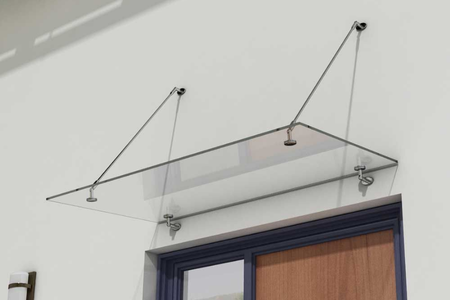
Glass canopies work best over back doors or side entrances, particularly where they complement large glass doors opening onto a garden or patio. They let light through while providing weather protection, which can brighten an otherwise dark entrance hallway or utility area.
What You'll Pay
Polycarbonate options (which aren't real glass, despite often being marketed alongside glass canopies) start from just £30 to £200, though build quality at the lower end is often questionable. Genuine glass canopies with aluminium or stainless steel brackets typically cost £400 to £600. Large or curved toughened glass designs — which require specialist manufacture — can run from £600 to £1,000 or more.
The Practical Reality
Glass requires careful handling during installation, which adds time and cost. The material is heavy and unforgiving of mistakes — drop it and you're starting again. Budget £200 to £300 minimum for professional fitting, more for complex designs. This isn't a DIY job unless you're genuinely experienced.
The maintenance reality is that glass shows dirt quickly — bird droppings, water marks, fallen leaves, general atmospheric grime. You'll be cleaning it more often than other options if you want it to look its best. For a canopy you can fit and forget, glass isn't ideal.
Design flexibility is also limited. Unlike composite or GRP, you can't easily get decorative shapes or traditional profiles in glass. It suits contemporary properties but looks strange on period homes.
The Hidden Costs That Catch People Out
Whatever type of canopy you're considering, the sticker price is rarely the whole story. Here's what else to factor into your budget:
Installation varies enormously. A composite canopy might cost nothing if you fit it yourself, or £100 if you'd rather get a handyman in for an hour. A large timber canopy with scaffolding and specialist labour? You could easily be looking at £1,500 or more.
Delivery ranges from free to £300 or more depending on the supplier, canopy size, and your location. Some companies (including us) include delivery in the price; others treat it as an expensive extra. Always ask upfront whether delivery is included in your quote.
VAT catches people out regularly. Not all suppliers include VAT in their advertised prices. A £500 canopy plus VAT is actually £600. Always check whether the quote you've received is VAT-inclusive before comparing prices.
Ongoing maintenance is where timber really adds up. That £40 per year doesn't sound much, but over 15 years it's £600 in materials alone — plus your time every spring with a paintbrush. Composite and GRP cost nothing to maintain.
Roofing for timber canopies is often forgotten entirely. Slates, tiles, and a roofer to fit them can easily add £500 or more to a wooden canopy project. Make sure you're comparing complete costs.
Regional labour rates vary significantly across the UK. Professional installation in London or the South East will cost noticeably more than the same job in the Midlands or the North.
Making the Right Choice
There's no universally "best" canopy — it depends entirely on your property, your budget, and how much ongoing effort you're willing to put in.
If you want minimal hassle and good long-term value, composite or GRP makes the most sense. The upfront cost is reasonable, installation is straightforward, and you won't spend another penny on maintenance for years to come.
If you've got a period property, a listed building, or you simply want that traditional country house look, timber might be worth the maintenance commitment. Just go in with your eyes open about the ongoing costs and effort involved.
For modern homes with contemporary architecture, metal or glass could be exactly the right fit — provided you're comfortable with the higher price point and (for glass) the cleaning requirements.
Whatever you're considering, make sure you're comparing total costs — not just the headline price. A £200 wooden canopy that needs £1,500 in installation, roofing, and years of maintenance isn't cheaper than an £800 composite that you can fit yourself in an afternoon and then never think about again.
At Apex Canopies, we manufacture composite and GRP door canopies with free UK delivery and a 10-year warranty. If you'd like advice on which style might suit your property, get in touch — we're happy to help.